Overwatering vs Underwatering: How to Tell the Difference
Compare soil, roots, leaf patterns, and pot weight to distinguish overwatering from underwatering without guessing from one symptom.
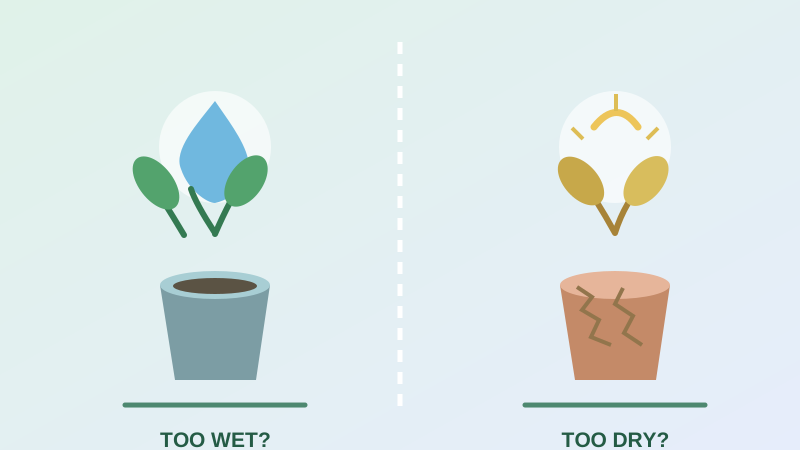
Overwatering and underwatering can both cause drooping, yellowing, or brown leaves. The fastest first check is the potting mix: feel moisture below the surface, lift the pot, and confirm that water can escape. Do not water a drooping plant automatically; roots damaged by constantly wet soil may be unable to absorb water.
Compare the signs
| Clue | Overwatering or poor drainage | Underwatering |
|---|---|---|
| Soil condition | Wet for many days, sometimes sour-smelling | Dry well below the surface; pot feels light |
| Leaves | May yellow, feel soft, or drop; symptoms can spread | May curl, droop, feel limp, or develop crispy edges |
| Stems and roots | Stems near the soil may soften; roots may be dark or mushy | Roots and soil may be shrunken or very dry |
| Water behaviour | Pot remains heavy or water collects in the outer pot | Water may run down gaps around a very dry root ball |
| First step | Pause watering, check drainage and roots if decline is serious | Rehydrate thoroughly but carefully, then allow drainage |
These symptoms are not universal. Species, temperature, light, root damage, pests, and potting mix affect the pattern. Soil condition is often a more useful first clue than leaf appearance by itself.
How to check moisture properly
Press a finger into the mix; the top surface can dry while the lower pot remains wet. For a large container, use a clean wooden skewer to check deeper. Lift the pot if you can and learn how it feels after watering versus when dry. A moisture meter may add another clue, but readings depend on the meter and mix.
Low light usually means slower growth and lower water use. The University of Minnesota Extension indoor-light guide specifically cautions that plants in lower light use less water, so avoid overwatering by checking the soil.
What to do if the plant is overwatered
- Stop adding water until the moisture level falls; do not leave the pot standing in a saucer.
- Confirm that the drainage holes are open and the outer pot is not holding water.
- Move the plant to a suitable spot with usable indirect light and normal airflow, away from harsh direct sun.
- If the plant is rapidly declining, the soil smells sour, or the base is soft, inspect the roots. Remove clearly mushy or collapsed roots with clean tools and repot into fresh, airy mix if needed.
- After recovery, water according to soil moisture and the plant’s needs rather than a fixed calendar.
Do not fertilise a plant with damaged roots to encourage recovery. Allow it to stabilise first and follow any product instructions conservatively.
What to do if the plant is underwatered
If the root ball is dry, water thoroughly until excess begins to drain. Let the container drain completely. If water immediately runs down the sides while the centre remains dry, apply water in stages and check the mix again. Severely dried peat-based mixes can become difficult to rewet; avoid leaving the pot in standing water for an extended period.
Remove fully dead leaves, but leave healthy tissue. Avoid immediately repotting or fertilising unless another issue is evident. Resume monitoring the moisture and drying time over the next watering cycle.
How light changes watering
A plant near a bright window may use water faster than the same species deep in a room. Larger pots and dense mix can stay wet longer; porous pots dry faster than plastic pots. Heating and air conditioning affect evaporation. These factors make a weekly watering schedule unreliable.
Start with a plant’s care needs, then observe your own pot. The low-light plant overview gives specific starting points, and each plant’s care card explains its water preference.
Mistakes to avoid
- Watering because a plant droops, without checking soil.
- Using a pot with no drainage holes.
- Leaving water inside the cachepot or saucer.
- Adding fertiliser to a plant with suspected root damage.
- Assuming every species should dry completely between watering.
FAQs
Can a plant be both overwatered and dehydrated?
Yes. Damaged roots may fail to take up water even though the mix is wet, so the leaves can resemble a drought-stressed plant.
Should I remove all yellow leaves?
Remove fully dead foliage as needed, but use the pattern and soil condition to investigate the cause.
How often should houseplants be watered?
It varies by species, pot size, mix, season, temperature, and light. Check the pot rather than relying on a universal schedule.
Does a moisture meter solve the problem?
It can help, but compare its reading with the soil, pot weight, plant symptoms, and meter instructions.
Sources
Add an observed case: Include a photo of the soil and leaves before intervention and a dated note explaining what the moisture check showed. Do not report a recovery time unless you observed and recorded it.
Read more explainers in Plant Problems, or learn how this site approaches research and corrections.
More in Plant Problems