Heartleaf Philodendron Care: A Guide for Trailing Vines
Care for heartleaf philodendron in lower-light rooms with practical advice on light, watering, pruning, propagation, and pet safety.
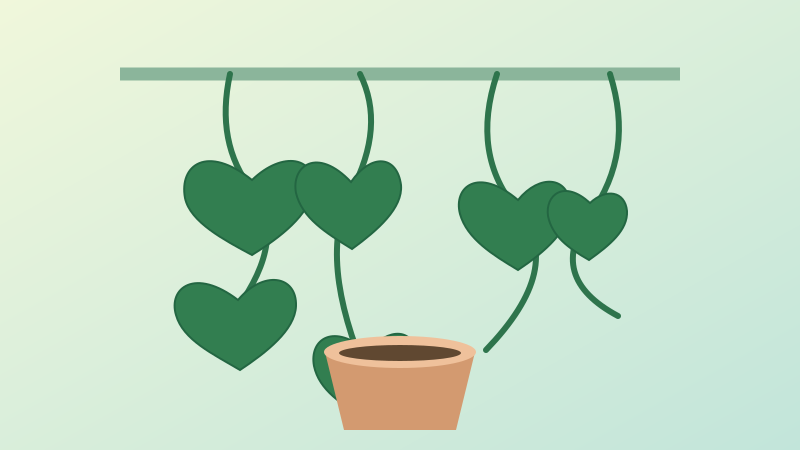
Heartleaf philodendron (Philodendron hederaceum) is a trailing foliage plant that can adapt to lower indoor light. It grows best with indirect daylight, a draining potting mix, and watering after the upper layer of soil begins to dry. In a dim room, growth slows and vines can become stretched, so the plant’s tolerance has limits.
Heartleaf philodendron care card
| Care factor | Practical guidance |
|---|---|
| Light | Low to bright indirect light; brighter indirect light helps maintain compact growth. Avoid strong direct sun. |
| Water | Let the top layer of mix dry before watering thoroughly. Allow drainage and reduce frequency when growth slows. |
| Soil | Airy indoor mix with drainage holes; avoid dense soil that remains soggy. |
| Pet toxicity | Toxic to cats and dogs. ASPCA lists insoluble calcium oxalates as the toxic principle. ASPCA entry. |
Where should you put the plant?
Choose a shelf or table where daylight reaches the leaves for several hours, even if the spot has no direct sun. Near a north window may work; an east window can offer gentler morning sun, depending on the room. Keep trailing vines away from pets who may chew them and from places where they can be damaged by doors or chairs.
Low light can cause longer spaces between leaves and smaller new foliage. If the plant begins to stretch, move it gradually toward brighter indirect light. A room with no windows needs a grow light if you want ongoing growth.
How should you water it?
Check soil moisture with a finger or wooden skewer. When the upper layer has dried, water until excess drains out. Empty the saucer; the roots need air as well as moisture. Do not keep the mix constantly wet simply because the plant comes from a tropical environment.
A heavy pot and wet soil paired with yellow leaves suggest that watering may be too frequent or the mix too dense. A very dry root ball, crisp edges, and a light pot may suggest dehydration. These symptoms overlap, so check the soil before acting.
Pruning and propagation
Use clean scissors to trim a vine just above a node. Pruning can encourage side shoots over time and gives you cuttings for propagation. A cutting intended for rooting should include at least one node, the point where a leaf and roots can emerge. Place the node in water or a suitable propagation medium, keep it in bright indirect light, and avoid letting leaves remain submerged.
You can train a vine along a support, let it trail, or trim it for a compact look. Rotate the pot occasionally for more even growth. Do not prune heavily if the plant is already stressed by root trouble or a sudden environmental change.
Why are leaves yellow or brown?
Older leaves may yellow naturally, but multiple leaves changing quickly call for a check. Frequent causes include wet soil, poor drainage, sudden changes in light, under-watering, and pests. Brown tips can follow inconsistent moisture or salt accumulation. Inspect leaf undersides and stem joints for pests before treating the plant.
Fertiliser should support active growth, not compensate for lack of light. Follow the product label and use a conservative dose. Repot only when roots crowd the container or the mix degrades; an oversized pot can remain wet too long.
Mistakes to avoid
- Keeping the root zone permanently wet.
- Assuming a dim corner will produce lush, compact vines.
- Propagating a cutting without a node.
- Using fertiliser to treat every yellow leaf.
- Placing the plant where pets can chew it.
Is heartleaf philodendron pet-safe?
No. The ASPCA entry for heartleaf philodendron lists it as toxic to cats and dogs. The plant contains insoluble calcium oxalates that can irritate the mouth and cause drooling, vomiting, and difficulty swallowing after chewing. Keep it out of reach and call a veterinarian if ingestion occurs. Breathing or swallowing problems are an emergency.
FAQs
Can I grow heartleaf philodendron in a bathroom?
Yes if it has adequate daylight or a grow light. Humidity is not a replacement for usable light.
Why is the vine long with few leaves?
The plant may be reaching for more light. Move it to a brighter indirect position and prune selectively.
Should I mist it daily?
Daily misting is not necessary. Focus on appropriate watering, clean foliage, and a stable environment.
Is a moss pole necessary?
No. It can provide support, but the plant can also trail from a hanging pot or shelf.
Sources
Room-note prompt: Add a photo showing the vine’s placement and a dated note on leaf spacing before and after any light adjustment you actually make.
Read more explainers in Plant Guides, or learn how this site approaches research and corrections.
More in Plant Guides