Snake Plant Care: How to Grow It Without Overwatering
Learn how much light a snake plant needs, when to water, which soil drains well, and what to know about pet safety.
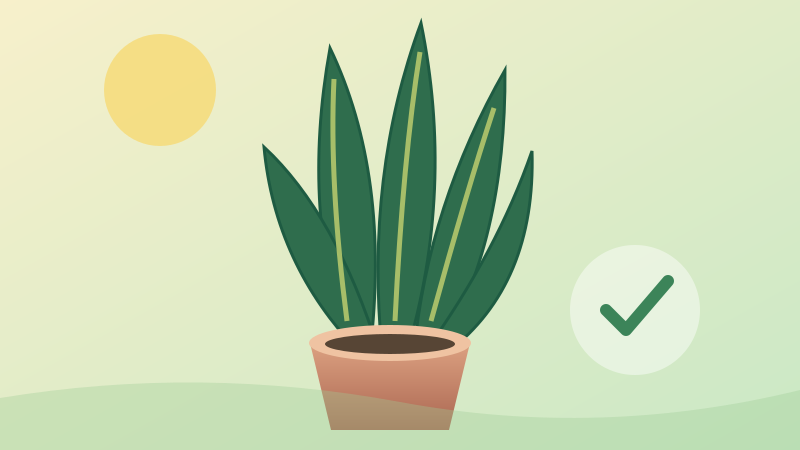
Snake plants (Dracaena trifasciata, formerly Sansevieria trifasciata) store water in thick leaves and underground rhizomes. They tolerate lower indoor light and can go longer between waterings than many leafy houseplants. The key is a bright-enough position, a draining mix, and patience: in dim rooms, growth is often slow.
Snake plant care card
| Care factor | Practical guidance |
|---|---|
| Light | Low to bright indirect light; brighter indirect light usually supports steadier growth. Avoid abrupt movement into intense sun. |
| Water | Let the potting mix dry through much of the pot before watering again. Water less often in cool, low-light conditions. |
| Soil | Very free-draining indoor mix, ideally formulated for succulents or amended for drainage; pot must have drainage holes. |
| Pet toxicity | Toxic to cats and dogs. ASPCA lists saponins as the toxic principle. See the ASPCA entry. |
Where should a snake plant sit?
Snake plants handle a broad range of indoor light, but they should not be expected to thrive indefinitely in a windowless room without supplemental lighting. Near a north or east window can work, depending on obstructions and distance from the glass. If growth has stopped for a long period, check light, temperature, and root condition before feeding more fertilizer.
Tall leaves may lean toward the brightest direction. Rotate the pot a quarter turn occasionally if this helps it grow more evenly. Avoid exposing a plant that has lived in shade directly to harsh midday sun; acclimate it gradually.
How often should you water?
There is no safe universal schedule. A small clay pot in a warm, bright room may dry faster than a large plastic pot in an air-conditioned office. Press a finger into the soil, use a wooden skewer, and learn how a watered pot feels compared with a dry one. Water thoroughly when the mix is dry through much of the container, and empty the saucer.
Do not respond to every wrinkle or leaf bend with more water. Root rot can damage a plant’s ability to take up moisture, creating symptoms that look like drought. If the soil is wet and leaves become soft or yellow, stop watering and inspect drainage and roots.
What soil and pot should you use?
A standard potting mix that holds a lot of water may remain wet too long. Use a mix with plenty of air spaces and a container with drainage holes. Terracotta can help the mix dry faster, but it is not a cure for poor watering habits. Choose a pot only modestly larger than the root mass; excess wet soil is risky.
Repot when the rhizomes crowd the container, the plant becomes unstable, or roots and rhizomes fill the pot—not just because a date has arrived. Handle the thick leaves gently and use clean tools.
How do you propagate a snake plant?
Common methods include dividing offsets or rhizomes and rooting leaf sections. Division preserves the characteristics of variegated cultivars more reliably than leaf cuttings, which may not reproduce the same pattern. Allow cut surfaces to dry briefly before planting into a suitable mix. Keep newly divided plants lightly watered and avoid keeping the medium saturated while roots re-establish.
Common symptoms
Yellow, mushy leaves: often a warning of prolonged wet soil or root trouble. Check the mix and drainage immediately.
Wrinkled or curling leaves: may point to dehydration but can also occur with damaged roots. Check moisture below the surface before watering.
Little growth: can be normal in low light and cool conditions. Compare the position with a brighter indirect-light spot and check the roots if there is a decline.
Brown tips: can result from physical damage, salt accumulation, or environmental stress. Trim only the dry portion with clean scissors if its appearance bothers you.
Mistakes to avoid
- Watering when the pot is still wet.
- Using a pot without drainage.
- Moving the plant from a dim corner into strong direct sunlight all at once.
- Assuming a snake plant can live indefinitely in complete darkness.
- Placing leaves where curious pets can chew them.
Are snake plants safe for pets?
No. ASPCA lists snake plants as toxic to cats and dogs; ingestion may cause nausea, vomiting, and diarrhoea. Choose a different species if pets can reach the leaves, and verify the exact plant in the ASPCA database. If a pet eats plant material, contact a veterinarian for advice.
Frequently asked questions
Can snake plants survive in offices?
Yes, when they have some daylight or supplemental plant lighting, suitable temperatures, and careful watering. Ordinary darkness is not a substitute for light.
Should I mist a snake plant?
No routine misting is needed. It stores water in its tissues; misting the leaves does not solve lighting or root problems.
Do snake plants need fertiliser often?
No. In a low-light space, growth can be slow. Use a balanced houseplant fertiliser sparingly during active growth and follow its label.
Why is my snake plant falling over?
Check for rot, a crowded or unstable pot, overly wet soil, and physical damage. Do not automatically add water.
Sources
Add your own evidence: Photograph the plant and pot, note the light position, and record how deep you checked the soil before watering.
Read more explainers in Plant Guides, or learn how this site approaches research and corrections.
More in Plant Guides