Grow Lights for Low-Light Rooms: How to Choose and Use One
Learn what to look for in a grow light, how to position it, and how a timer can help houseplants in dim rooms or windowless offices.
A grow light can help houseplants in a dim room by providing usable light for photosynthesis, but the result depends on the fixture, distance, coverage, and daily duration. Choose a light intended for plants, follow the manufacturer’s instructions, and observe the leaves rather than assuming any bright-looking bulb will work.
When is a grow light worth considering?
Consider supplemental lighting when daylight is weak for much of the day, a plant shows stretched growth, or you want to keep plants in an interior office away from windows. It is particularly important in a windowless room: ordinary room lighting is designed mainly for people, not necessarily to deliver the right intensity to plant leaves.
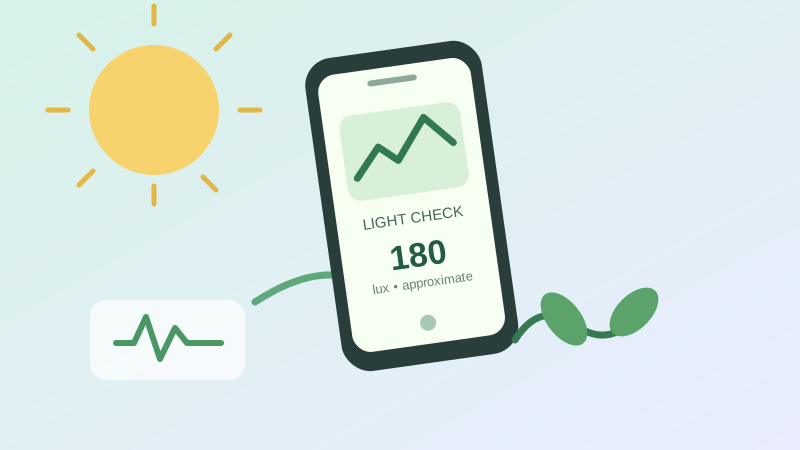
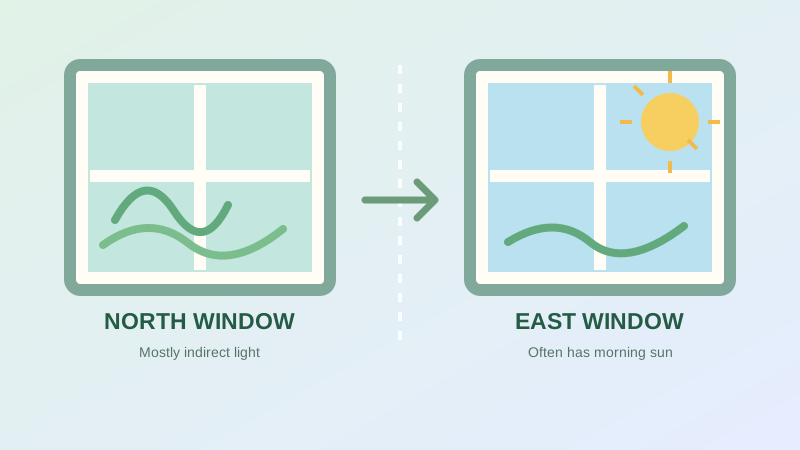
Before buying anything, try placing the plant closer to a window if the species tolerates the available light and temperature. The guide to measuring indoor light with a phone can help compare positions, although phone readings are approximate. The University of Minnesota Extension lighting guide describes common indoor light categories and the use of artificial lighting.
What should you look for in a grow light?
- Coverage: the useful light should reach the plant’s full canopy, not just the top leaf.
- Adjustable height: this makes it easier to change distance as the plant grows.
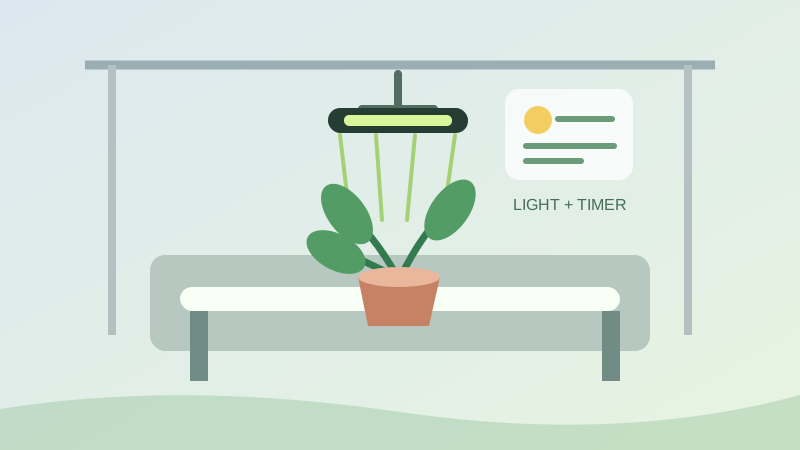
- Timer or timer compatibility: a consistent photoperiod is easier than remembering to switch the light on and off.
- Heat management: check the manufacturer’s recommended distance and ensure the fixture does not overheat foliage or nearby materials.
- Practical energy use: compare input wattage and coverage, but do not judge plant performance by wattage alone.
- Safety and build quality: choose a reputable fixture, keep water away from electrical parts, and follow installation instructions.
“Full spectrum” is a marketing phrase used for many products; it does not guarantee that a particular light is strong enough at your plant’s distance. If the manufacturer provides PPFD or coverage data, read it at the actual hanging height and footprint.
How far away should the light be?
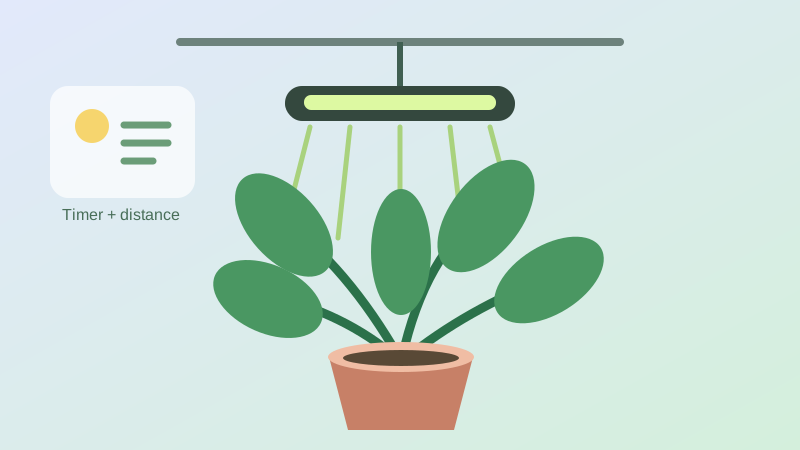
There is no universal distance. Fixture output, optics, plant size, and manufacturer recommendations matter. Start with the manual’s suggested range, place the light so it covers the leaves evenly, and watch for symptoms. Bleached or dry patches can indicate too much intensity or heat; stretched growth may indicate too little light. Adjust gradually rather than making a large sudden change.
A light meter designed for plants can be more useful than a phone app for some measurements, but no single number substitutes for understanding the species and how long the light runs.
How long should a grow light stay on?
Many foliage houseplants benefit from a consistent daily light period, often in the range of roughly 12–14 hours under suitable intensity, but plant needs differ and more is not always better. Use a timer if the manufacturer’s guidance and the plant species support that duration. Give the plant a dark period; leaving a light on around the clock is not a sound default.
If natural daylight reaches the room, count that exposure as part of the day’s total. Introduce artificial lighting gradually and check how the plant responds over several weeks.
Grow lights in a windowless office or bathroom
For a genuinely windowless space, an appropriately selected grow light is not an optional decoration; it is the main source of photosynthetic light. Place the plant and fixture where the light can reach the foliage, choose a timer, and avoid electrical exposure to splashes. A bathroom with a window may require less help, but humidity cannot replace adequate light.
For rooms where no fixture is practical, rotate plants periodically to a brighter location rather than assuming they can live indefinitely under decorative ceiling lights. See plants for windowless offices and bathrooms.
Mistakes to avoid
- Buying by wattage alone.
- Placing the fixture too far from the leaves.
- Leaving the light on all day and night.
- Ignoring heat and electrical safety.
- Expecting a grow light to solve overwatering, poor soil, or pests.
FAQs
Can a normal LED bulb work?
Sometimes it can contribute light, but its usefulness depends on intensity, distance, and spectrum. A plant-oriented fixture with coverage guidance is easier to evaluate.
Do grow lights need a timer?
A timer is a practical way to provide consistent daily lighting and avoid accidental 24-hour exposure.
Can I leave a grow light on overnight?
Do not use 24-hour lighting as the default. Plants generally benefit from a consistent photoperiod that includes darkness.
Does a grow light replace window light?
It can provide supplemental or primary light when selected and positioned appropriately. Whether it replaces daylight depends on the plant, fixture, duration, and coverage.
Sources
Add a documented setup: Before publishing a product recommendation, record the fixture model, manufacturer-recommended distance, coverage footprint, and actual timer schedule.
Read more explainers in Light and Placement, or learn how this site approaches research and corrections.
More in Light and Placement