Plants for Windowless Offices and Bathrooms: What Actually Works?
Understand the limits of windowless rooms, choose suitable low-light plants, and use grow lights safely when daylight is absent.
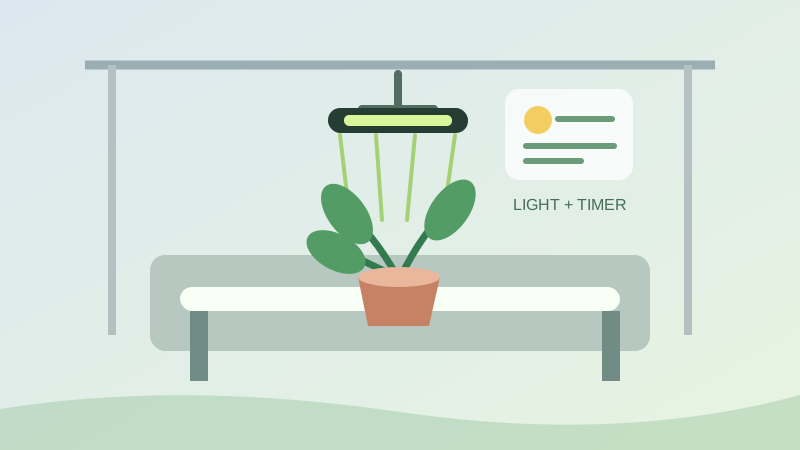
A plant cannot grow indefinitely in a genuinely windowless room using ordinary darkness or decorative ceiling light alone. Choose a shade-tolerant species for a room with some daylight, or provide a suitable grow light on a timer. Bathrooms and offices can be humid or cool, but humidity and room comfort do not replace usable light.
First, decide whether the room is actually windowless
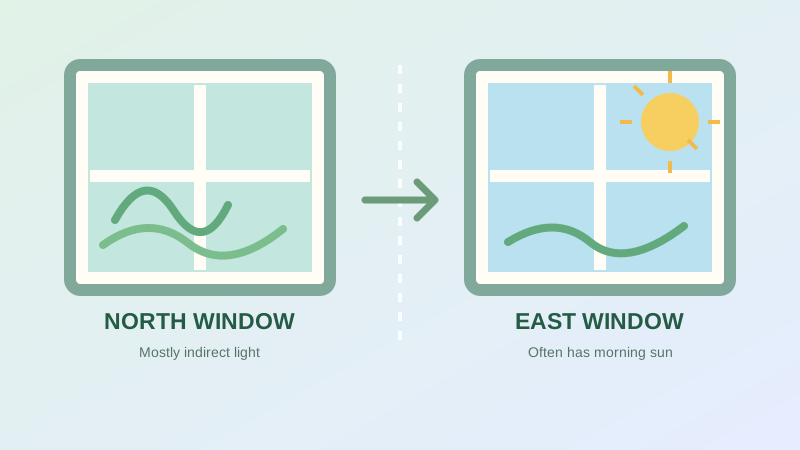
A bathroom with a frosted or small window may still receive daylight. An office deep inside a building may receive almost none. Observe where the plant will sit at different times of day and compare it with a brighter location. A north-facing room with a large unobstructed window can offer more light than a room with a small window facing into a shaded shaft.
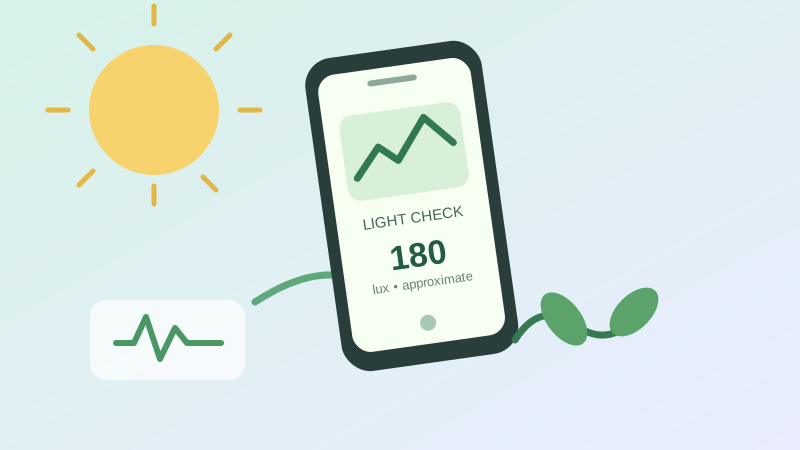
A phone light-meter app can compare spots, but its values are approximate. Our indoor-light measurement guide explains how to record readings consistently.
Which plants work in dim rooms?
Pothos, snake plant, ZZ plant, cast iron plant, Chinese evergreen, heartleaf philodendron, peace lily, and parlor palm tolerate lower light to varying degrees. The best choice depends on temperature, water habits, available space, and pet safety. Low-light tolerance usually means slower growth and less watering—not a lack of light requirement.
If pets can reach the plant, confirm species toxicity first. The pet-safe low-light plant guide explains which common options are listed as toxic or non-toxic by ASPCA.
Compare options for offices and bathrooms
| Situation | Practical option | Important caution |
|---|---|---|
| Windowless office with desk space | A compact plant plus a nearby grow light | The light must reach the leaves for enough hours; ceiling lighting may not be sufficient |
| Small bathroom with daylight | Cast iron plant, pothos, parlor palm, or another suitable foliage species | Match the plant to actual brightness; humidity is not enough |
| Bathroom with no daylight | A plant under a grow light or periodic rotation to a bright place | Keep electrical equipment away from splashes and follow its instructions |
| Shared office with pets or visiting animals | Consider cast iron plant or parlor palm after confirming the exact species | Avoid relying on vague common names or leaving toxic plants within reach |
| Low maintenance desired | Snake plant or ZZ plant in adequate light | Their water-storing tissues make overwatering a common risk; both are toxic to pets |
How to use a grow light
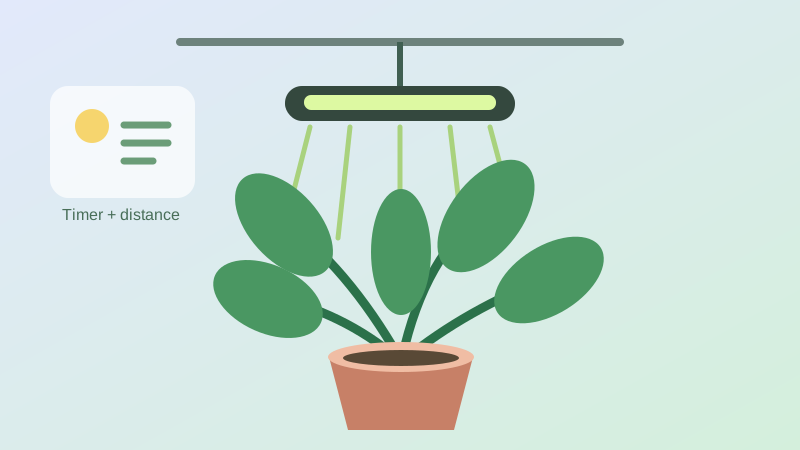
Choose a fixture intended for plant growing, check its coverage and manufacturer-recommended distance, and set a timer for a consistent daily light period appropriate to the species and fixture. Many foliage houseplants use supplemental lighting for around 12–14 hours per day under suitable intensity, but this is not a universal prescription. Plants need darkness too; do not leave a light running 24 hours by default.
Use a stable fixture, keep cords away from water and walking paths, and watch for heat at the leaf surface. “Full spectrum” on packaging is not proof that the light is strong enough at your chosen distance. See grow lights for low-light rooms for selection and positioning.
How should you water in a windowless room?
Plants generally grow and use water more slowly when they receive less light. Check the soil before each watering and let excess water drain. A plant in a large pot may remain wet for many days, especially in a cool office or air-conditioned bathroom. Do not water on a schedule designed for a bright windowsill.
If a plant is declining, check light and moisture together. Yellow leaves plus wet soil may point to root stress rather than thirst. Stretched stems and small new leaves may indicate insufficient light.
Common mistakes
- Treating a windowless room as low light rather than no daylight.
- Assuming bathroom humidity solves the lighting problem.
- Using a decorative LED bulb without considering coverage and intensity.
- Leaving a grow light on all night.
- Watering as frequently as a plant in a brighter room.
- Ignoring pet-toxicity listings.
FAQs
Can a snake plant live in a windowless office?
It needs usable light. Use a suitable grow light or move it periodically to a brighter location; darkness alone is not enough.
Are bathrooms good for houseplants?
They can be, if light and temperature suit the species. High humidity does not compensate for absent daylight.
How long should a grow light be on?
Follow guidance for the fixture and plant. A consistent period around 12–14 hours is often used for foliage plants, but intensity and daylight exposure matter.
Which plant is best for a windowless room?
There is no plant that thrives in permanent darkness. Choose a suitable plant-light setup first, then select a species that fits watering, space, and pet needs.
Sources
- University of Minnesota Extension: Lighting for indoor plants
- ASPCA: Toxic and non-toxic plants database
Add a real room example: Photograph the actual room and light fixture, record the grow-light model and timer, and note where the plant canopy sits. Don’t call a location windowless unless it truly has no usable daylight.
Read more explainers in Light and Placement, or learn how this site approaches research and corrections.
More in Light and Placement