How to Measure Indoor Light for Plants With a Phone
Use a phone light-meter app to compare plant locations, understand the limits of the reading, and choose a better low-light spot.
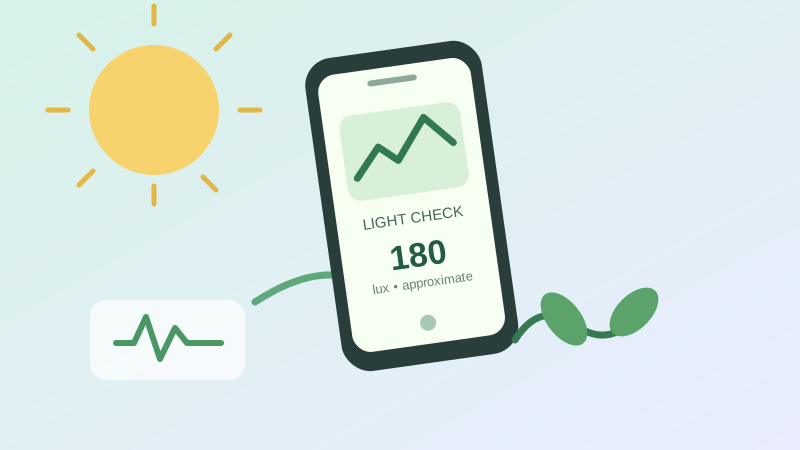
A phone light-meter app can help compare two plant locations, but it should be treated as a rough guide, not a calibrated horticultural instrument. Take readings at leaf height, repeat them at different times, and compare the same phone in each spot. Combine the readings with window direction and how the plant grows over several weeks.
What a phone app can and cannot tell you
Many apps use a phone’s ambient-light sensor; others estimate brightness through the camera. Different phones have different sensors, app methods, and calibration. The number is most useful for comparing places with the same device under similar conditions. It may not match a dedicated light meter closely enough to use a strict threshold.
For general room placement, the University of Minnesota Extension’s indoor-light guide gives broad categories, including about 50–250 foot-candles for low light. Use such ranges as context rather than a pass/fail test for every species.
How to compare two plant spots
- Open a reputable light-meter app and grant only the permissions it needs.
- Hold the phone at the height and angle of the plant leaves, not at your chest or across the room.
- Record the reading with the time, date, weather, window direction, and distance from the window.
- Repeat in the morning, around midday, and in the afternoon. Cloud cover and direct sun can shift readings quickly.
- Compare two candidate spots using the same phone and method.
- Repeat the comparison on another day if the result seems unusual.
- Watch the actual plant for several weeks: stretched growth and smaller leaves can signal that the location is not providing enough light.
Do not point a camera sensor at a bright window and compare that reading with a sensor facing away from it; the angle and direction change what is measured.
Light-level reference table
| Approximate category | Rough indoor guide | Possible plant placement |
|---|---|---|
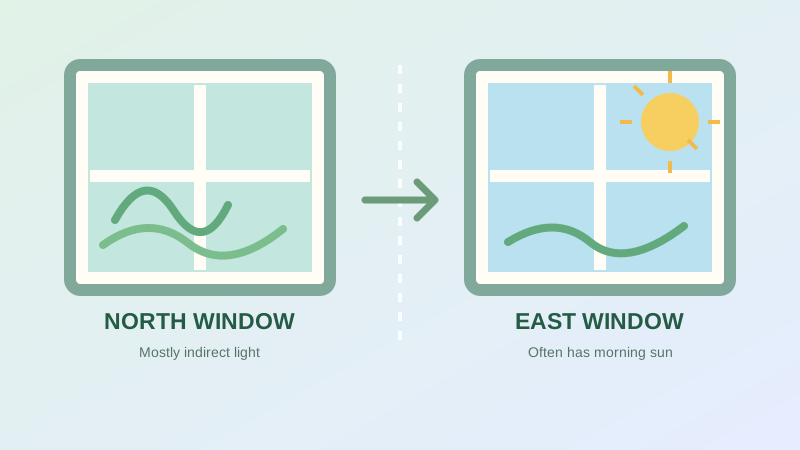
| Low | 50–250 foot-candles | Near a north window or a naturally dim corner that still receives daylight |
| Medium | 250–1,000 foot-candles | Near an east window or farther from a brighter window |
| High | Above about 1,000 foot-candles | Bright window areas, with care around direct sun and heat |
These categories come from extension-style guidance and are not exact requirements for all plants. Different species and cultivars use light differently, and daily exposure duration matters in addition to a momentary reading.
Why readings may be misleading
A screen brightness slider is not a light meter. A phone case, hand, camera angle, or sensor position can interfere with results. A reading at noon does not describe the rest of the day. Glass, sheer curtains, balcony roofs, trees, neighbouring buildings, and seasonal sun angles all affect the light reaching leaves.
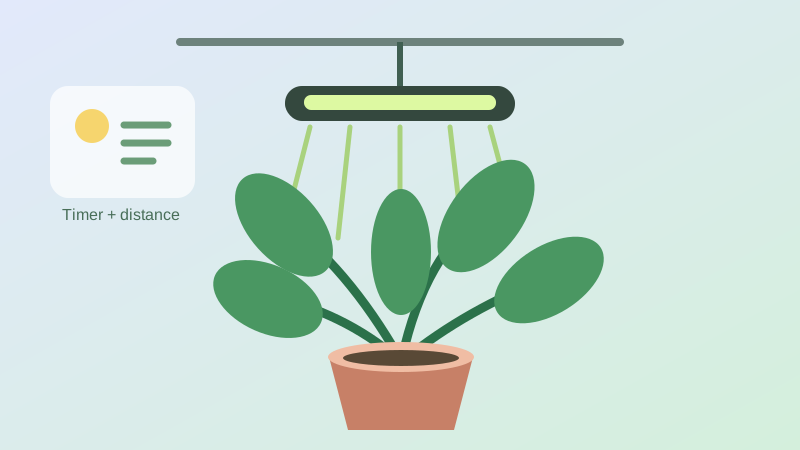
If you want higher confidence, use a dedicated lux meter or a plant-light meter and read its instructions. For grow lights, a lux value also does not fully describe the light spectrum; specialised plant measurements such as photosynthetic photon flux density (PPFD) may be more relevant, though they require suitable equipment.
What should you do with the result?
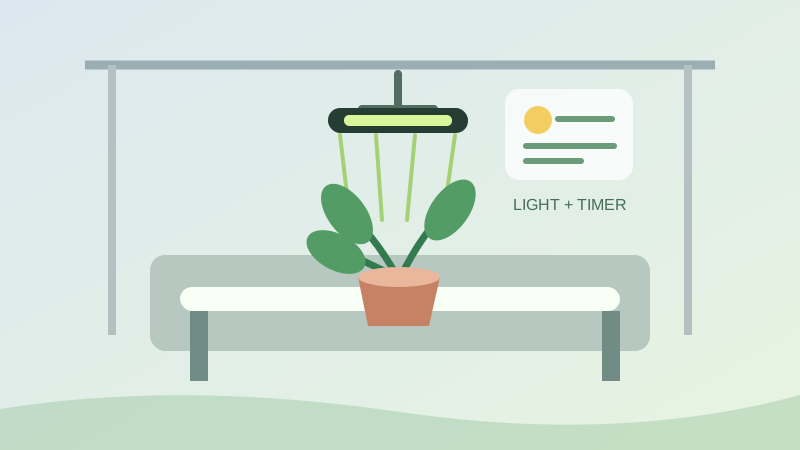
Use readings to choose among realistic options. For example, if a north-window shelf consistently receives more light than an interior bookcase, the shelf is the better starting point for a plant that tolerates low light. If a spot receives virtually no daylight, plan on a grow light. Do not move a shade-adapted plant straight into harsh sun just because it records a higher number; acclimate it gradually.
See north-facing vs east-facing window plants and grow lights for low-light rooms for the next steps.
Mistakes to avoid
- Treating one instant reading as a whole-day average.
- Comparing readings from different phones or different app methods.
- Measuring away from the plant’s leaf position.
- Treating a precise-looking number as proof of accuracy.
- Ignoring plant growth, moisture use, and window conditions.
FAQs
Is a free phone app accurate enough?
It may help compare spots, but its absolute accuracy depends on the phone and app. Use a dedicated meter if the exact reading matters.
Should I measure the light at the window?
Measure where the leaves will actually sit. Light declines with distance and can change around obstacles.
Do I need to measure every day?
Not usually. A few readings at different times and weather conditions can help compare positions; repeat if the season or room setup changes.
What if the room has no daylight?
Plan for appropriate supplemental plant lighting rather than relying on a phone reading of ordinary ceiling lights.
Sources
Add your own test before launch: Capture a phone-app screenshot taken at leaf height, record the app/device and time, and compare at least two spots using the same method. Label the figures as approximate.
Read more explainers in Light and Placement, or learn how this site approaches research and corrections.
More in Light and Placement